
Taking that first step to ask for help is a huge sign of strength. If you’re here, it means you’re already on your way. This guide is here to walk alongside you as you explore online counselling in Ontario—a flexible, private way to find support from a space where you feel most comfortable. We understand that life can feel heavy, and finding the right help shouldn’t add to that weight.
Embracing a Gentler Path to Mental Wellness
It’s completely normal to feel unsure about where to even start. Maybe you’ve noticed that the small, everyday stressors are starting to pile up, or perhaps you’re navigating a major life change that just feels overwhelming. These feelings aren’t a sign of failure; they are a sign of being human.
Online therapy offers a way to sort through these experiences without the extra pressure of commuting to an office. It creates a quiet space where you can connect with a compassionate professional right from your own home, making support more accessible than it’s ever been. Whether you’re in a bustling city or a small rural town, help is right there. The goal is to find care that fits into your life, not the other way around.
Your Feelings Are Valid
Sometimes, the things that weigh on us the most are hard to put into words. You might find yourself feeling constantly on edge, having trouble sleeping, or pulling away from people and activities you once enjoyed. Or maybe you find yourself always trying to please others, even at your own expense, just to keep things calm. This is often called the “fawn response,” and like other reactions to stress, it’s a way your nervous system has learned to protect you.
These aren’t character flaws. They are your mind and body’s ways of coping when the stress has become too much to carry by yourself. They are survival strategies, not personal failings.
Remember, seeking support isn’t about “fixing” something that’s broken. It’s about learning new ways to navigate your inner world, honouring your experiences, and building resilience with a trusted guide by your side.
A New Way to Connect and Heal

One of the biggest gifts of online counselling is the chance to find the right person to talk to, not just the closest one. This means you can connect with a therapist who truly specializes in what you’re going through, whether it’s anxiety, grief, or past trauma.
This guide is designed to give you the information you need to make the best choice for your well-being. It all starts with understanding that you deserve to feel heard, supported, and hopeful again.
How Online Counselling Actually Works

The idea of therapy through a screen might feel a little strange at first, and that’s completely okay. It’s natural to wonder how a real, human connection can form without being in the same room. But it’s much simpler and more personal than you might imagine.
Think of it like building a bridge of understanding and support. Technology is simply the tool that helps span the distance, allowing you and your therapist to connect heart-to-heart, no matter where you are in Ontario.
The focus is still on you—your thoughts, feelings, and experiences—in a private, focused conversation. You’ll meet your therapist on a secure, easy-to-use video platform designed specifically for healthcare. This isn’t like a casual video chat; these platforms are built with strict privacy standards to ensure your conversation is confidential, creating a safe digital space for you to open up.
What a Typical Session Feels Like
Your first session is a gentle introduction. It’s a chance for you to share a bit about what’s on your mind and for your therapist to listen with warmth and without judgment. You don’t need to have everything figured out before you start; your therapist is there to help guide the conversation.
As you continue, you’ll build a trusting relationship. Each session is a dedicated time for you to explore challenges, celebrate small wins, and learn new ways of coping. This process might involve different therapeutic approaches tailored to you. For example, some therapists use specialized methods like EMDR, which can be done effectively online. If you’re curious about how this specific approach works, you can explore more about EMDR therapy and its process.
The most important part of therapy isn’t the room you’re in—it’s the quality of the connection you build with your therapist. A strong, trusting therapeutic relationship can absolutely be formed online.
This connection allows you to feel truly seen and heard, which is the foundation for healing and growth.
The Simple Steps to Get Started
Getting started with online counselling in Ontario is a straightforward process. It usually involves just a few simple steps that put you in control of your journey.
- Initial Contact: You’ll typically fill out a secure form or make a phone call to a clinic to express your interest.
- A Brief Consultation: Many therapists offer a free, brief consultation. This is your chance to ask questions and see if their approach feels right for you.
- Scheduling Your First Session: Once you feel comfortable, you’ll book your first official appointment at a time that works for your schedule.
- Connecting for Your Session: Before your appointment, you will receive a secure link. At the scheduled time, you just click the link from your computer, tablet, or phone to join the private video session.
Is Online Counselling as Effective as In-Person Therapy?
It’s completely normal to wonder if talking to someone through a screen can really make a difference. So many of us picture therapy happening in a quiet, cozy office, and it’s fair to ask if that same feeling of safety and connection can be built virtually.
You might be thinking, “Will it feel the same? Can a therapist really get to know me through a camera?”
These are important questions, and the answer is a reassuring one. The most vital ingredient for successful therapy isn’t the room you’re in—it’s the strength of the relationship you build with your therapist. That warm, trusting, and supportive connection is the true foundation for change, and it can absolutely be built online.
The Power of the Therapeutic Connection
Think of the technology as just the bridge. What truly matters is the person waiting for you on the other side.
A skilled and empathetic therapist knows how to create a space where you feel seen and heard, whether that’s across a room or through a secure video session. The focus stays right where it should be: entirely on you and your journey.
For many common challenges, including anxiety, stress, and depression, study after study has shown that online therapy is just as effective as traditional in-person sessions. This is a huge deal, because it means that powerful, life-changing support is more accessible than ever before, no matter where you live in Ontario.
Ultimately, what matters most is finding a format that feels safe and comfortable for you. For many people, the comfort of their own home actually allows them to be more open and vulnerable than they might feel in an unfamiliar office.
What the Research Says About Online Counselling
This isn’t just a gut feeling—it’s backed by solid evidence.
Extensive research on online counselling in Ontario and across Canada confirms that virtual mental health support, especially through video, delivers results on par with face-to-face therapy. Studies have shown similar positive outcomes for people working through depression, PTSD, substance use, and OCD, proving its effectiveness across different age groups and communities.
You can dive deeper into the research findings on tele-mental health interventions to learn more for yourself.
The bottom line? You don’t have to compromise on the quality of care to get the convenience and comfort of online sessions. Your healing journey is valid, and the path you choose to take—whether virtual or in-person—is the one that’s right for you.
Finding the Right Support Services in Ontario
Ontario has a rich landscape of mental health support, but navigating it can feel overwhelming when you’re already struggling. That’s completely understandable. Our goal here is to offer a gentle guide through the different avenues available, so you can feel empowered to find care that truly feels right for you.
From publicly funded services to private therapy practices like ours, understanding your options is the first step. The right path is always the one that honours your unique needs, experiences, and identity.
Navigating Public and Private Care
In Ontario, mental health support generally falls into two main categories. Knowing the difference can help you decide where to begin your search.
- Publicly Funded Services: These are often offered through community health centres, hospitals, and non-profit organizations. They are typically covered by OHIP, but it’s true that there can sometimes be a waitlist for services.
- Private Therapy Practices: These include individual therapists or clinics, like Gentle Pathways, offering specialized care. While these services have a fee, they are often covered by private insurance plans and can provide more immediate access to support tailored to your specific concerns.
Your well-being is what matters most. Whether you start with a community resource or a private therapist, the most important thing is that you’re taking a step toward feeling heard and supported.
Finding Care That Honours Your Identity
You deserve to work with a therapist who gets it—someone who understands your lived experience without you having to explain it all. Thankfully, there is a growing focus in Ontario on providing care that is culturally sensitive and affirming.
This means you can seek out therapists who specialize in:
- Culturally Specific Counselling: Support that understands and respects your cultural background, values, and community.
- Support for Indigenous Communities: Services that are rooted in Indigenous knowledge, traditions, and healing practices.
- 2SLGBTQIA+ Affirming Care: Therapists who provide a safe, non-judgmental space for individuals of all gender identities and sexual orientations.
When you’re looking for support, it’s more than okay to ask a potential therapist about their experience working with people from your community. For those who have experienced past trauma, finding a professional skilled in this area is absolutely key. You can learn more about finding specialized trauma therapy near you that prioritizes safety and understanding.
Your Central Hub for Help
One of the most valuable resources for finding online counselling in Ontario is ConnexOntario. Think of it as a compassionate and confidential guide, ready to connect you with the help you need, right when you need it.
In a recent year, the hub handled over 92,000 contacts and made nearly 246,000 referrals to various treatment organizations, including virtual programs and culturally specific supports. This shows just how many people are reaching out and finding the support they deserve. You can discover more insights from their 2024 annual report.
How to Choose the Right Online Therapist for You
Finding the right therapist is a deeply personal journey, and it’s completely okay to take your time. The connection you build with this person is the very foundation of your healing.
Think of it less like an interview and more like finding a trusted partner for your journey—someone who makes you feel safe, seen, and truly heard.
Your feelings and experiences are valid, and you deserve a professional who honours that. This process is about discovering who feels like the right fit for you. Trusting your intuition is incredibly important here. If a conversation doesn’t feel right, it’s okay. That feeling is your inner wisdom guiding you toward the support you truly need.
Verifying Credentials and Specializations
Before anything else, it’s essential to make sure you’re connecting with a qualified professional. In Ontario, look for credentials like Registered Psychotherapist (RP) or Registered Social Worker (RSW).
These titles aren’t just letters after a name; they mean the individual is accountable to a professional college and follows strict ethical and privacy standards.
Beyond credentials, think about their areas of focus. Many therapists specialize in specific challenges like trauma, anxiety, or grief. Finding someone with experience in what you’re navigating can make a world of difference because they already understand the landscape of your experiences.
Questions to Gently Guide Your Search
Many therapists offer a free, brief consultation call. This is a wonderful opportunity for you to get a feel for their personality and approach without any pressure. It’s your space to ask questions and see if their energy resonates with you.
Here are a few thoughtful questions you might consider asking:
- Can you describe your approach to helping someone with concerns like mine?
- What does a typical session with you look like?
- How do you help create a feeling of safety and trust in online sessions?
- What is your experience working with people who have shared my experiences?
Remember, the goal of this conversation isn’t to test them, but to feel them out. Pay attention to how you feel while you’re talking to them. Do you feel listened to? Do you feel a sense of warmth and understanding?
A Checklist to Organize Your Thoughts
It can be helpful to have a simple way to keep track of your impressions, especially if you speak with more than one person. This checklist can help you sort through your feelings and make a choice that feels right.
Checklist for Finding Your Ideal Therapist
Use these points to guide you during your search and initial consultations to find the best fit for your needs.
| Checklist Item | My Notes |
|---|---|
| Credentials & Specialization | Do they have the right qualifications and experience for my needs? |
| Connection & Comfort | Did I feel heard, respected, and comfortable during our talk? |
| Therapeutic Approach | Does their way of working sound like it would be helpful for me? |
| Logistics | Are their session times, fees, and platform use a good fit for me? |
| My Gut Feeling | What is my intuition telling me about this person? |
Taking this step is a brave and hopeful act of self-care. Be gentle with yourself through this process. The right person is out there, ready to walk alongside you with compassion and support as you navigate your path forward.
Making Your First Online Session a Success
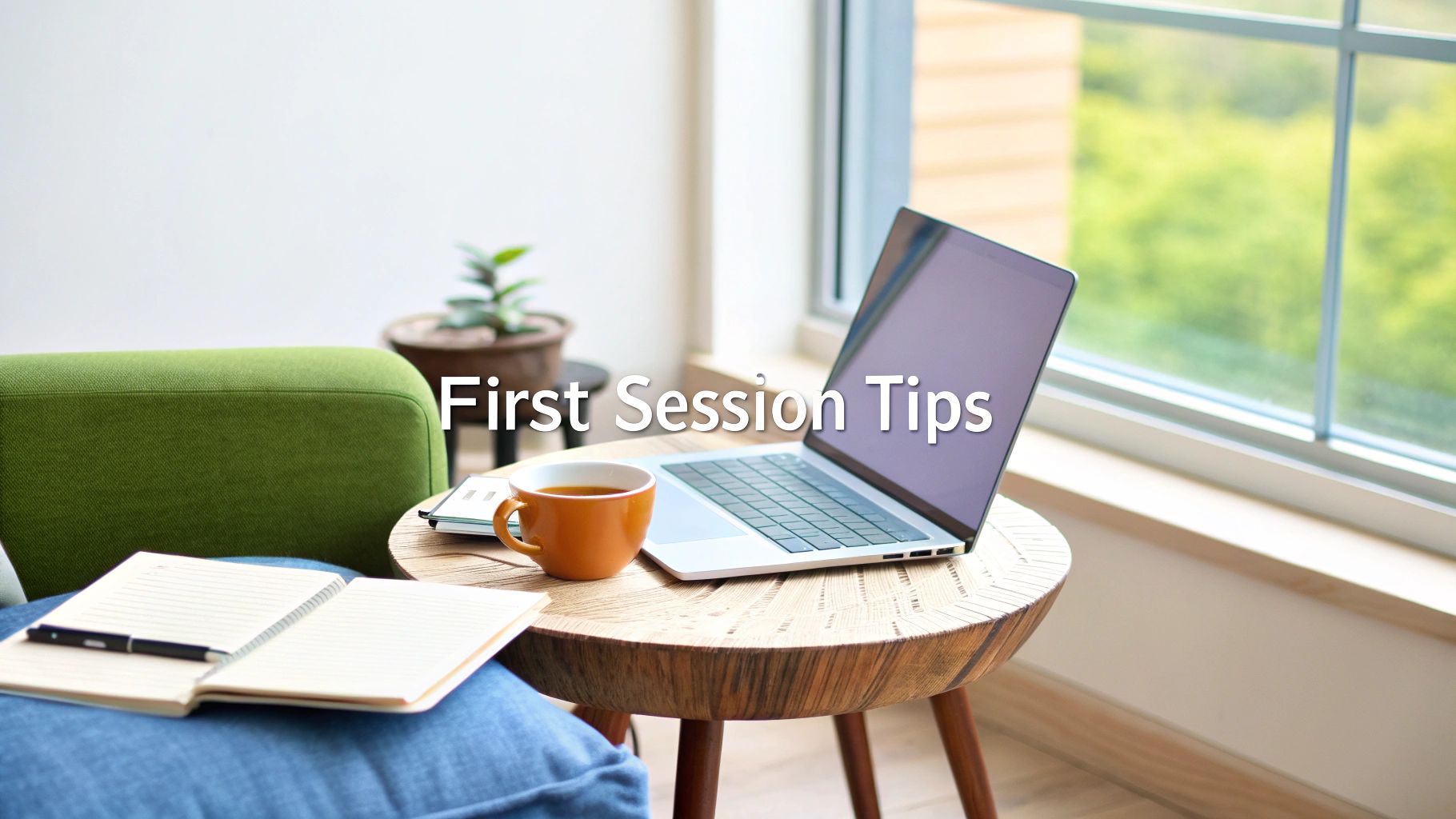
It’s completely normal to feel a little nervous before your first therapy session. Taking this step is a meaningful act of self-care, and having some jitters about what’s to come is all part of the process.
This gentle guide is here to help you create a calm, supportive space for yourself, so you can feel present and ready for your appointment.
The goal isn’t to be perfectly prepared, but simply to make yourself as comfortable as possible. Remember, your therapist is there to guide the conversation, so you don’t have to carry the pressure of knowing exactly what to say or where to begin.
Creating Your Calm Space
Setting the stage for your session can make a world of difference. Think of it as creating a small sanctuary for yourself, even if it’s just for an hour.
Here are a few simple tips to help you get settled:
- Find a Private Spot: Choose a quiet room where you won’t be interrupted. This helps create a sense of safety and confidentiality for your conversation.
- Check Your Connection: A few minutes beforehand, do a quick check of your internet and device. This small step can prevent technical hiccups from adding any extra stress.
- Have Comforts Nearby: Pour yourself a cup of tea or a glass of water. Having something comforting to sip on can feel grounding and help you settle in.
It’s important to remember that this time is just for you. Giving yourself these few moments to prepare honours the commitment you’re making to your well-being.
Gently Gathering Your Thoughts
Sometimes, it can be helpful to jot down a few thoughts or feelings you might want to talk about. This doesn’t need to be a detailed script—just a few bullet points can be enough to get the conversation flowing.
That said, it is also perfectly fine to show up with nothing written down at all. Your therapist is skilled at asking gentle questions to help you explore what’s on your mind.
You can find more helpful advice in our guide on making the most of your first counselling session.
No matter how you prepare, know that just showing up is the most important part. Be proud of yourself for beginning this journey.
Your Questions About Online Counselling Answered
Taking that first step toward therapy often brings up a lot of questions. That’s completely normal. It’s wise to want to understand how it all works, especially when it comes to something as personal as your own well-being.
Below, we’ve put together some gentle, clear answers to the most common questions we hear about starting online counselling in Ontario. We hope this gives you the reassurance you need to feel confident as you move forward.
How Do I Know My Privacy Is Protected?
This is such an important question, and one you should always feel comfortable asking. Just like with in-person sessions, registered therapists in Ontario are bound by strict confidentiality laws (like HIPPA) for all online work.
We use secure, encrypted video platforms specifically designed for healthcare to protect your privacy. Think of it as a digital version of a soundproof office. When you’re considering a therapist, it’s always a good idea to ask what platform they use to make sure it meets these provincial privacy standards.
Is Online Counselling Covered by OHIP?
Generally, OHIP doesn’t cover psychotherapy or counselling services from therapists in private practice. However, many workplace benefits or private insurance plans do.
The best first step is to check your benefits package. Look for coverage details under terms like ‘psychotherapy,’ ‘social work,’ or ‘psychological services.’ Most therapists, including us, can provide you with an official receipt that you can submit to your insurance provider for reimbursement.
Your well-being is the top priority, and finding the right support is a journey of self-compassion. The therapeutic relationship is the most important part of counselling, and you deserve to feel safe, heard, and understood.
What if I Don’t Feel a Connection?
It is perfectly okay if the first therapist you meet isn’t the right fit. In fact, finding that strong connection is the very foundation of effective therapy. You deserve to work with someone who makes you feel truly seen and understood.
If you don’t feel that click after a session or two, it is completely acceptable to let them know you’ll be seeking someone else. A good therapist will understand and will support your decision to find the best possible care for yourself. Trust your intuition—it’s a powerful guide on this journey.
At Gentle Pathways, we are here to support you with compassionate, trauma-informed care. Your story matters, and you don’t have to navigate it alone. If you feel ready to take the next step, we invite you to connect with us. Let’s explore how we can help you build resilience and find your way back to yourself. Learn more about our services.