When your child is lost in a storm of anger, it’s completely normal to feel overwhelmed, frustrated, and even a little helpless. If you’ve ever felt this way, please know you are not alone. So many of us navigate this territory, and your feelings are entirely valid.
But before we dive into specific strategies, let’s start with a crucial shift in perspective. This one change is the foundation for everything else—it’s about learning to see your child’s outburst not as a personal failure or an act of defiance, but as a desperate signal.
Seeing the Child Behind the Anger

Behaviour Is Communication
At its heart, a child’s intense behaviour is often the only way they know how to communicate overwhelming feelings or unmet needs. Their brains are still building the tools for emotional regulation, so what can look like “bad behaviour” is usually a distress flare—a sign that their internal world is in chaos.
They aren’t giving you a hard time; they are having a hard time.
This understanding invites us to get curious instead of furious. It’s an invitation to pause and gently ask ourselves:
- What is my child’s behaviour trying to tell me right now?
- Is there a need that isn’t being met? (Think safety, connection, hunger, or rest.)
- What might be overwhelming their system at this moment?
This mindset doesn’t excuse hurtful actions, but it does help explain them. It moves us from a place of judgment (“Why are you being so difficult?”) to one of genuine compassion (“I can see you’re struggling. How can I help?”).
A child’s angry outburst is a nervous system response, not a character flaw. When we see the scared or overwhelmed child beneath the behaviour, we can respond with the connection and safety they truly need to heal and learn.
The Power of Co-Regulation
Children learn to manage their emotions by first borrowing our calm. This is a concept we call co-regulation, and it’s absolutely essential. When you can remain a steady, regulated presence in the face of their storm, you become their safe harbour. Your calm nervous system helps soothe theirs in a way they can’t yet do for themselves.
Think of it this way: you can’t put out a fire by spraying it with more fire. Meeting a child’s dysregulated state with our own anger only adds fuel to their emotional fire. Our calm is the water that helps them cool down.
This approach takes immense patience and self-compassion. You won’t get it right every time—and that is perfectly okay. The goal here is connection, not perfection. Every attempt to stay calm, even for a moment, sends a powerful message of love and safety.
Decoding Your Child’s Anger Triggers
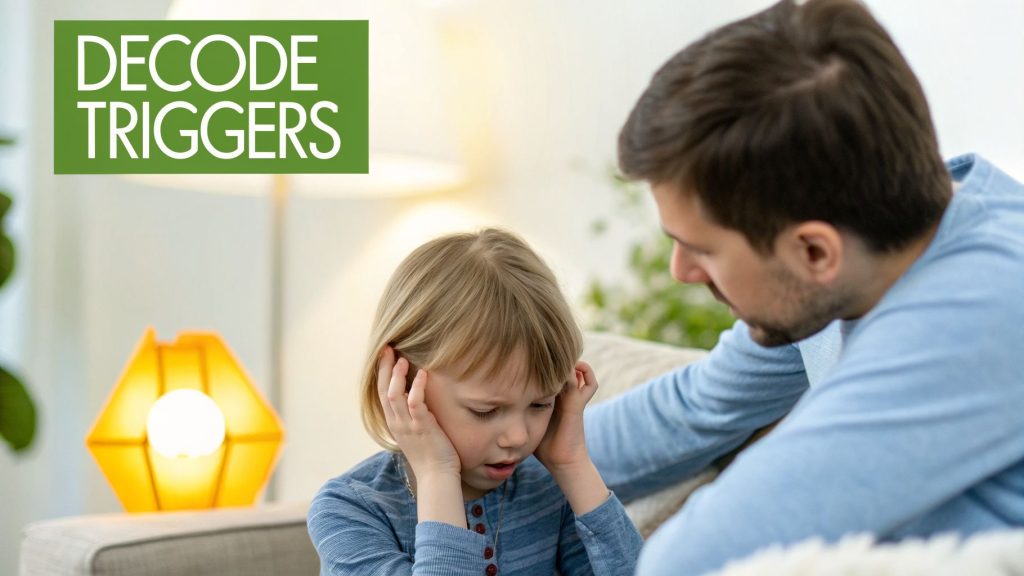
A child’s anger often feels like it comes out of nowhere—a sudden, intense storm that leaves everyone reeling. But it rarely just happens. Like storm clouds gathering before a downpour, there are almost always subtle clues and patterns leading up to an outburst.
Your role isn’t to be a judge looking for someone to blame. It’s to become a gentle detective, looking for clues with warmth and curiosity.
When we start paying close attention, we can begin to see what’s really fuelling these big emotions. This practice of compassionate observation is one of the most powerful tools in anger management for kids. It shifts us from constantly reacting to outbursts to proactively supporting our child before they even happen.
Looking Beyond the Obvious
Sometimes, the cause is crystal clear—a sibling grabs a toy, or you announce that screen time is over. But so often, the real triggers are much quieter and easily missed. These hidden stressors can fill a child’s emotional bucket drop by drop until, finally, it overflows.
Let’s explore some of the most common, but often misunderstood, triggers:
- Sensory Overload: Think about the scratchy tag on a t-shirt, the constant hum of the fridge, or the bright, overwhelming lights of a grocery store. For some children, especially those who are highly sensitive, these inputs are exhausting and can easily lead to a meltdown.
- Transitions: Moving from one activity to another, even a fun one, takes a lot of mental energy for a child. The simple shift from playing at the park to getting buckled into the car can feel jarring and dysregulating.
- Physical Needs: This is the classic “hangry” child. Hunger, exhaustion, thirst, or feeling unwell are massive triggers for emotional dysregulation. A child’s ability to cope with even minor frustrations plummets when their basic physical needs aren’t met.
- Emotional Exhaustion: Many kids work incredibly hard to “hold it all together” at school or daycare. That classic after-school meltdown might not be about defiance at all. More often than not, it’s a child finally releasing all the pent-up stress from their day in the one place they feel safe enough to fall apart—with you.
Becoming a Trigger Detective
Your mission is simply to observe and take gentle note of what happens before the anger shows up. You don’t need a fancy journal; a quick note on your phone or even just a mental check-in can work wonders. The goal is to spot the patterns without judgment.
When you see frustration starting to bubble up, ask yourself a few quiet questions:
- What time of day is it? Is it close to a meal or naptime?
- What was going on right before they got upset?
- What is the environment like? Is it loud, crowded, or overstimulating?
- How much sleep did they get last night?
Understanding your child’s unique triggers is empathy in action. It’s the profound realisation that the behaviour isn’t the problem—it’s the visible symptom of an invisible struggle.
This loving detective work empowers you to make small, supportive adjustments. Maybe it means offering a snack before running errands, giving a five-minute warning before a transition, or dimming the lights in the evening. This isn’t about avoiding all difficult feelings. It’s about creating an environment where your child has a better chance of managing them. To better understand the emotional landscape behind your child’s outbursts, exploring a resource like an anger issues test can offer helpful insights for you as a parent.
Remember, this is a process of learning together. By decoding these triggers, you’re not just preventing outbursts; you are sending your child a powerful message: “I see you, I understand you, and I am here to help.” That feeling of being seen and supported is the very foundation of healing.
Creating a Safe Space for Big Emotions
When a child’s emotional storm hits, their little nervous system is completely overwhelmed. They’re in survival mode. In that moment, they don’t need a lecture or a consequence; what they desperately need is a safe harbour. Your calm, steady presence is the single most powerful tool you have to help them find their way back to solid ground.
Creating tangible sources of calm in your home can make all the difference. This isn’t about building a perfect, Pinterest-worthy environment. It’s about intentionally weaving in moments and spaces of peace that your child can turn to when their world feels chaotic.
The Power of Your Calm Presence
Before we can help our kids regulate, we have to find our own anchor. Let’s be honest—this is often the hardest part. A child’s intense anger can easily trigger our own stress, pulling us right into the storm with them.
But your calm is a gift to your child’s struggling nervous system.
When you stay grounded during your child’s storm, you are literally lending them your calm. This act of co-regulation is not just about managing a behaviour; it’s about modelling emotional safety and building deep, lasting trust.
Staying regulated yourself might look like:
- Taking one slow, deep breath before you say or do anything.
- Silently repeating a mantra like, “This is a hard moment, not a bad child.”
- Physically feeling your feet on the floor to ground yourself in the here and now.
This isn’t about being perfect. It’s about being present. Your effort to stay calm sends a powerful, non-verbal message of safety and love, even when words can’t get through.
Building a Cozy Nook or Peace Corner
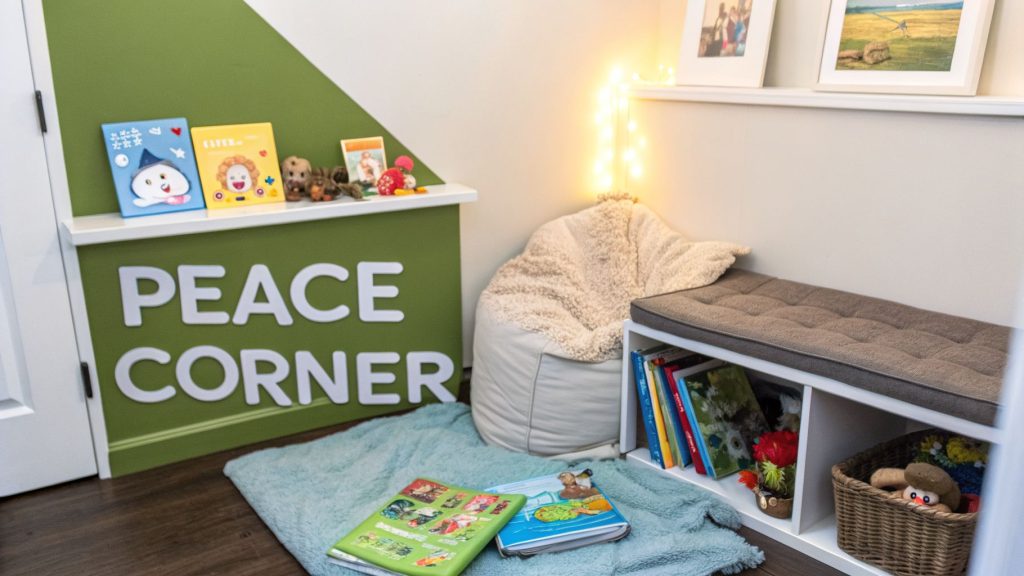
Every home can benefit from a designated spot where a child can go to feel safe and settle their body. This is absolutely not a time-out spot for punishment. Think of it instead as a positive, inviting space they choose to use when their feelings get too big.
It’s their personal reset button.
To create one, find a quiet corner and fill it with comforting items that appeal to the senses. The goal is to create a soothing retreat that helps their nervous system downshift from high alert.
Here are a few ideas to get you started:
- Comforting Textures: A soft beanbag, a weighted blanket, a basket of plush pillows, or a fuzzy rug.
- Sensory Tools: Squishy stress balls, glitter jars, fidget toys, or noise-cancelling headphones.
- Visual Calm: Books about feelings, soft lighting from a small lamp or fairy lights, or pictures of beloved family members or pets.
Introduce this special space during a calm, happy moment. You could say, “This is our family’s cozy corner. It’s a place we can go when we just need a little break to feel peaceful.” Model using it yourself when you feel stressed, showing that it’s a healthy tool for everyone in the family.
The Emotional Safety of Routines
Predictability is incredibly soothing for a child’s nervous system. When kids know what to expect from their day, it reduces that underlying hum of anxiety, freeing up their mental energy and making them less likely to become overwhelmed.
Routines are like an emotional scaffold, providing a familiar rhythm and structure that helps them feel secure. This doesn’t mean you need a rigid, minute-by-minute schedule—it’s more about creating a predictable flow to the day.
This foundation of stability has a huge impact. Research shows that helping children manage anger reactivity in their early years has measurable, positive consequences for their future. One long-term study found that temperamental anger in toddlers was linked to later difficulties in school, which really highlights how crucial this early support is. You can explore the full findings on childhood temperament in this in-depth research.
By creating these pockets of safety—through your own presence, a cozy physical space, and predictable daily rhythms—you are doing so much more than just managing anger. You are teaching your child, moment by moment, that their big feelings are manageable, that they are safe, and that they are unconditionally loved, even in their stormiest moments.
Gentle Techniques to Calm the Storm Together
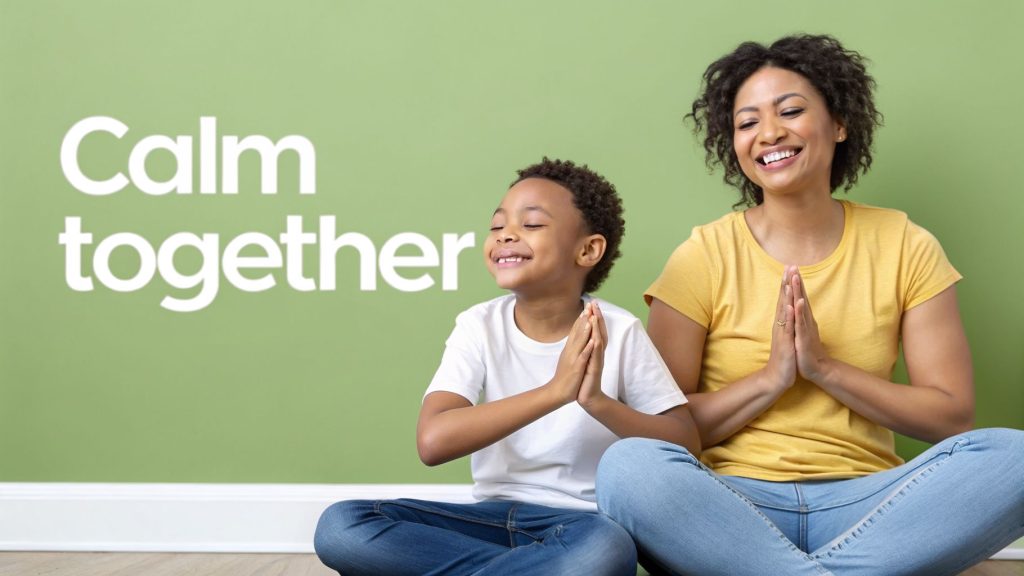
After the emotional wave has passed and the storm inside your child begins to settle, a quiet, sacred space opens up. This moment isn’t for lectures or consequences about what went wrong. Instead, it’s a precious opportunity to gently teach the skills they need for next time—not as a teacher to a student, but as a warm, trusted guide walking alongside them.
The most effective anger management for kids happens in these calm, connected moments. By practicing skills together when everyone is regulated, you’re building a shared toolkit that feels familiar and easy to reach for when stress inevitably rises again. This is where you build their emotional vocabulary, showing them that while every single one of their feelings is valid, there are safer ways to let them out.
Teaching the Body to Find Calm
Before a child can talk about their feelings, they first need to feel safe in their body. When anger takes over, their nervous system floods with stress hormones, putting them into a state of fight, flight, or freeze. Calming techniques are what help bring their thinking brain back online.
The key is to make these practices feel like a game, not a chore.
- Dragon Breaths: Invite your child to be a powerful dragon. “Let’s breathe in a big puff of fiery air,” you can say, breathing in deeply through the nose. “Now, let’s breathe out all the fire!” they can exhale powerfully through their mouth, making a satisfying whooshing sound. This reframes deep breathing as play, not a command.
- Bumblebee Breaths: Another fun one is to take a deep breath in, and on the exhale, hum like a bumblebee for as long as you can. The gentle vibration is incredibly soothing for an overstimulated nervous system.
- Pizza Massage: Have your child lie on their tummy while you “make a pizza” on their back. Gently knead the “dough” (their back), spread the “sauce” with flat palms, and sprinkle “cheese” with light fingertip taps. This provides calming deep pressure while strengthening your connection.
Remember, these skills are built through repetition and joy. By modelling these calming breaths and movements yourself when you’re feeling a bit stressed, you show them that these are lifelong tools for everyone.
Grounding in the Present Moment
Grounding is the simple act of pulling our attention away from the overwhelming storm of emotion and into the physical world around us. It’s an anchor in the here and now. When a child is getting swept away by anger, these sensory games can be a lifeline.
One of the best-known grounding techniques is the 5-4-3-2-1 Game. Together, you can gently notice:
- 5 things you can see (the blue rug, a shiny doorknob)
- 4 things you can feel (the soft blanket, the cool floor)
- 3 things you can hear (a bird outside, the hum of the fridge)
- 2 things you can smell (your laundry soap, a crayon)
- 1 thing you can taste (you can simply name the last thing you ate)
This simple exercise shifts their focus and helps their nervous system recognize that they are physically safe, right now. To give children more effective methods for managing intense feelings, integrating social emotional learning activities like these can significantly help them navigate the storm within.
A Quick Guide to Calming Strategies
Different moments call for different tools. What a child needs in the heat of a meltdown is very different from what helps them process it an hour later. Here’s a quick guide to practical strategies you can use together.
Anger Management Techniques for Different Needs
| Goal | Technique Example | How It Helps |
|---|---|---|
| Immediate Calming | Bear Hugs: Give your child a firm, loving hug (if they’re receptive) or encourage them to hug a large stuffed animal tightly. | Provides deep pressure, which has a powerful calming effect on an overwhelmed nervous system. |
| Releasing Physical Energy | Stomping Like a Dinosaur: Find a safe space and invite them to stomp their feet hard, just like a T-Rex. | Gives a physical outlet for the pent-up energy of anger in a way that is safe and doesn’t harm anyone or anything. |
| Expressing Feelings Later | Drawing the Anger: Once calm, offer paper and crayons. “Can you draw what your anger looked like? Was it a red scribble? A spiky monster?” | This externalizes the feeling, making it less overwhelming and providing a way to talk about it without direct confrontation. |
| Building Empathy | Storytelling with Puppets: Use puppets or dolls to act out a situation where one character got mad. Explore how the characters felt and what they could do. | Creates a safe, playful distance for children to explore complex social situations and understand different perspectives. |
Building these skills is a journey of patience and compassion for both you and your child. Every time you practise a dragon breath or draw an “anger monster” together, you are reinforcing a powerful message: “Your feelings are safe with me, and we can handle them together.”
Knowing When to Ask for Support
Parenting a child with big, explosive emotions can feel so isolating. If you’ve ever found yourself wondering if you’re doing something wrong or if you’re the only one going through this, please hear this: you are not alone, and your feelings are completely valid.
Deciding to reach out for professional support isn’t a sign that you’ve failed. It’s an act of incredible strength and love for your family. It’s a way of saying, “We deserve to feel more peace in our home, and I’m going to find the support to help us get there.”
Recognizing the Signs It’s Time for Help
It can be tough to tell the difference between a typical developmental phase and something that needs a bit more attention. You are the expert on your child, but there are some clear signs that professional support could make a real difference for your family.
It might be time to reach out if you notice your child’s anger:
- Is getting more intense or frequent. The outbursts seem bigger, last longer, or are just happening more and more.
- Leads to safety concerns. This could be aggression toward themselves, you, siblings, pets, or breaking things in the house.
- Constantly disrupts daily life. Their struggles make it hard to get through a school day, keep friends, or even enjoy simple family activities.
- Seems way out of proportion to the trigger. A minor frustration, like a toy not working, consistently leads to a massive, inconsolable meltdown.
It’s also a crucial time to seek help if you are feeling completely burnt out, overwhelmed, and at your wit’s end. Your well-being is the anchor for the entire family. Taking care of yourself is taking care of your child.
Seeking therapy isn’t about “fixing” a “problem child.” It’s about bringing a compassionate, skilled partner onto your team to help your entire family find more connection and calm.
Demystifying Child Therapy: What to Expect
The idea of therapy can sound intimidating, but for kids, it often just looks like play. A good, trauma-informed therapist knows that children communicate their deepest feelings not with words, but through their natural language: play.
They use specific, evidence-based approaches that help a child feel safe enough to let their guard down and begin to heal.
- Play Therapy: In a therapy room, a child might use dolls to act out a fight they had with a sibling or build a tall tower only to smash it down in frustration. The therapist is there to help them make sense of these big feelings in a safe, contained space.
- Art Therapy: A child who can’t find the words to say “I’m scared and angry” might be able to draw a picture of a roaring monster. This gives them a way to express and gain a sense of control over emotions that feel too big to name.
One of the most misunderstood behaviours we see in children who’ve experienced high stress is the “fawn response.” This is when a child, feeling unsafe, tries to avoid conflict by becoming overly pleasing and compliant. In simple terms, they learn to “people-please” to keep others happy and avoid getting into trouble. It can look like “good behaviour,” but it’s actually a coping mechanism born from stress. A skilled therapist can help a child reconnect with their own authentic feelings and learn that it’s safe for their needs to matter, too.
You Are Not Alone in This Struggle
It’s so important to remember the world our kids are growing up in. Children and youth in Canada are facing a growing mental health challenge, with anxiety, depression, and emotional dysregulation increasingly affecting young people. National data shows that the prevalence of mood and anxiety disorders has risen significantly over the past decade. For example, the percentage of Canadians meeting diagnostic criteria for generalized anxiety disorder doubled from 2.6% in 2012 to 5.2% in 2022, while major depressive episodes increased from 4.7% to 7.6% during the same period. Youth and young adults are particularly affected, and research consistently shows declining self-reported mental health among Canadians aged 12–25
These aren’t just numbers; they are families just like yours, navigating huge challenges. This reality highlights just how badly compassionate, accessible support is needed.
Deciding to seek therapy is a powerful step toward healing. If you’re wondering where to even start, we created a guide to help. You can read it here: how to determine if your child needs a mental health professional.
Remember, these difficult behaviours are your child’s way of coping. They are not a reflection of your parenting or a sign of your failure. They are a sign of struggle. With the right support, you and your child can learn new ways to navigate these storms together.
Frequently Asked Questions About Anger in Children
When you’re trying to navigate your child’s big, stormy feelings, it’s easy to end up with a whirlwind of questions. Feeling uncertain or worried when you’re in the thick of it is completely natural. Please know that these feelings are valid—they come from a place of deep love and concern.
This is a space for some of the most common worries we hear from parents. My hope is to offer some gentle reassurance, normalize what you’re going through, and give you a few clear, practical touchstones for your parenting journey.
Is It Normal for My Child to Be So Angry?
Yes, it is absolutely, 100% normal for children to feel and express anger, even with an intensity that can feel shocking to us as adults. Anger is a healthy, natural human emotion. A child’s brain is still building the complex wiring for self-regulation, which means they often feel their emotions in a powerful, unfiltered way.
Try to think of their intense anger not as defiance, but as a distress signal. It’s their way of communicating that they feel completely overwhelmed, frightened, misunderstood, or powerless. Shifting your perspective to see the behaviour as communication is the first, most powerful step you can take.
What Is the Difference Between a Tantrum and a Meltdown?
This is such an important question, because understanding the difference completely changes how we should respond. While they might look similar from the outside, they come from two very different places in the brain.
- A tantrum is often goal-oriented. The child wants something—a toy, more screen time, to stay at the park—and is using their behaviour to try and get it. They are still largely in control and will often peek to see if their behaviour is working. The tantrum usually stops once they get what they want or realise it isn’t going to happen.
- A meltdown, on the other hand, is a completely involuntary reaction to being emotionally or sensorily overloaded. Their nervous system has been pushed way past its capacity to cope. The child has lost access to their “thinking brain” and is operating purely from a place of survival. During a meltdown, they aren’t trying to manipulate you; they desperately need your calm presence to help them feel safe again.
The most compassionate response recognizes the distinction: a tantrum may require a firm, loving boundary, while a meltdown requires safety, co-regulation, and immense patience.
Should I Punish My Child for an Angry Outburst?
From a trauma-informed and brain-based perspective, punishing a child during or right after an emotional outburst can often do more harm than good. When a child is dysregulated, their brain is in a state of threat. Punishment in that moment just piles more fear and shame onto an already overwhelmed system. This can actually escalate the behaviour over time and, most importantly, damage your connection.
The priority must always be safety and connection first. Help them move through the storm without judgment. Once everyone is calm—and this might be an hour later, or even the next day—you can revisit what happened. This is when the real learning happens. You can talk gently about the feeling, validate it (“You were so angry when your tower fell”), and then teach them safer ways to express it next time. This approach builds skills and trust, not fear.
How Can I Stay Calm When My Child Is Yelling at Me?
This is incredibly hard, and it’s more than okay to admit that. When your child yells, it can trigger your own stress response in a split second. The most important first step is to take care of yourself, even in a small way.
Before you react, take one slow, deep breath. Feel your feet on the floor. It can help to silently repeat a mantra, like, “This is their storm, not mine,” or “They are having a hard time, not giving me a hard time.” This isn’t a personal attack on you, even if it feels like one; it’s a reflection of their internal struggle.
Your calm is the anchor they need. If you feel yourself escalating, it is perfectly okay to step away for a moment. Saying, “I need to take a quick break to calm my body. I will be right back,” is not giving up—it’s modelling healthy self-regulation for them.
What If My Child’s Anger Is a Sign of Something More?
Your parental intuition is powerful. If you have a nagging feeling that your child’s anger is more persistent, intense, or frequent than seems typical for their age, it’s always worth exploring. Sometimes, big anger can be linked to underlying challenges that need a bit of extra support.
One of the tough realities is that our systems aren’t always set up to provide the help our kids need. Across Canada, schools are also struggling to provide adequate mental health support for students. Research shows that school counsellors are often responsible for far more students than recommended for effective care. While evidence-based guidelines suggest a ratio of one school counsellor for every 250 students, many Canadian schools operate far above that level. In Ontario, for example, the average student-to-guidance counsellor ratio in secondary schools is approximately 396:1, and in some schools it rises to over 800 students per counsellor, significantly limiting access to timely mental health support.
This means that as parents, we often have to be our child’s primary advocates. If you’re concerned, seeking a professional assessment is a proactive and loving step. You can learn more about finding the right support with our guide to counselling for kids.
Remember, you are on this journey together. Every question you ask and every bit of support you seek is a testament to your love and dedication. Be gentle with yourself and your child as you navigate these waters.
At Gentle Pathways, we believe that every family deserves to find their way back to connection and calm. If you’re feeling overwhelmed and need a compassionate partner on your team, we are here to help. Discover our approach to child and family therapy and book a consultation at https://gentlepathways.ca/contact. You are not alone, and support is available.