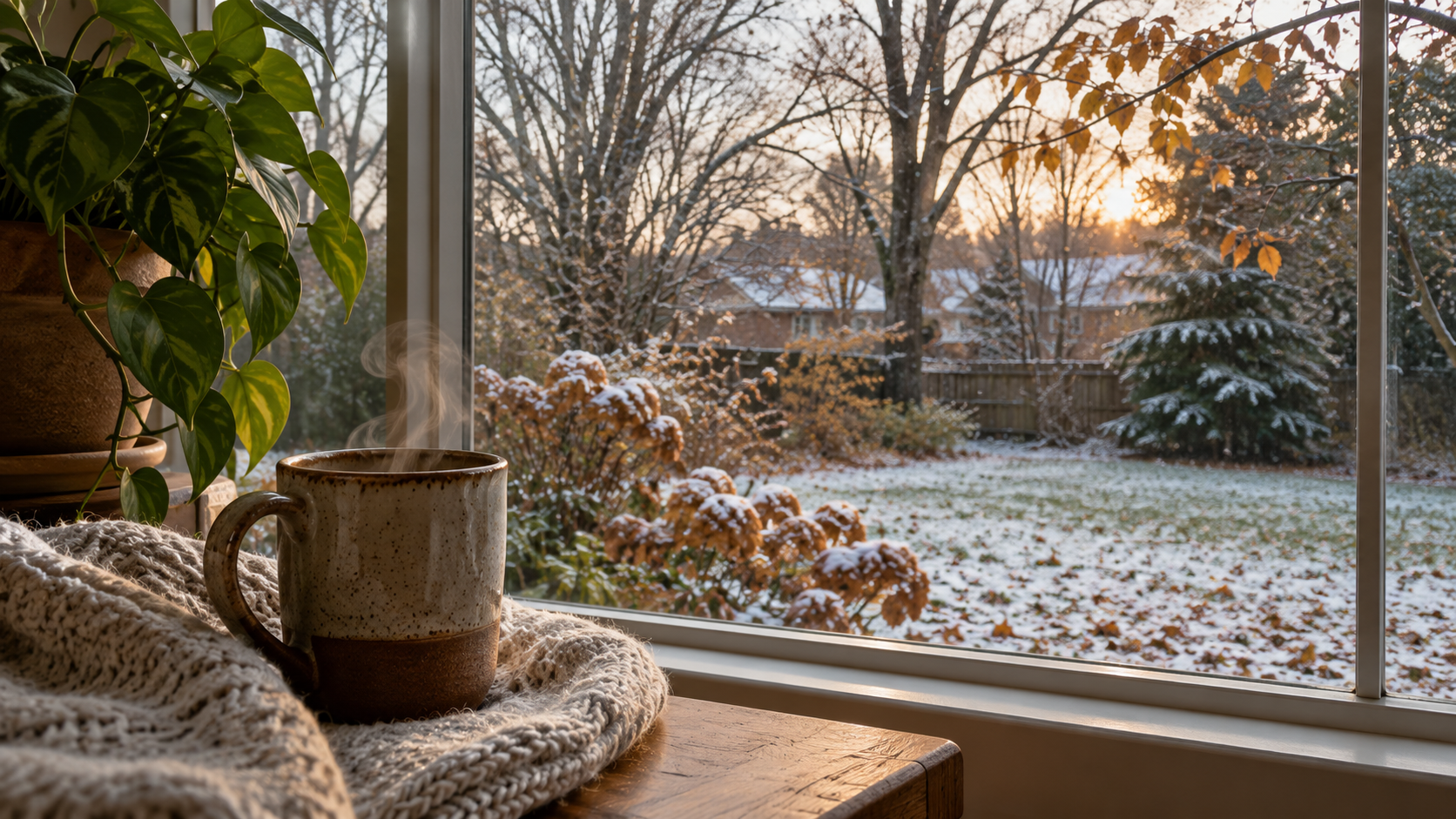
The clock says it is only five o’clock. The sky has other ideas. Your body seems ready for bed, dinner feels oddly late, and the walk you meant to take has disappeared into the dark.
If the transition into winter leaves you feeling a little out of step, you are not alone. Shorter days can change when we encounter daylight, how we move through our routines and how connected we feel to the people and places around us. In places that change the clocks, the return to standard time adds another adjustment to an already changing season.
The good news is that understanding what may be happening can make it easier to respond with curiosity instead of criticism. You do not need to become a perfect sleeper or learn to love every cold, dark afternoon. A few realistic supports, tailored to your life, can help you navigate the season with more kindness toward yourself.
This article is general education, not a diagnosis or a substitute for individual medical or mental health care.
The time change and shorter days are not quite the same thing
In many parts of Canada, clocks move back one hour in the autumn, returning from daylight saving time to standard time. Other places use different arrangements or do not change their clocks, and rules can change, so check your local guidance. In London, Ontario, the autumn change generally means the clock moves back while daylight saving time ends.
The clock change does not make the day itself shorter. The amount of daylight has been decreasing gradually since the summer solstice, and continues to decrease until the winter solstice. What changes overnight is the clock time at which sunrise and sunset appear: after the autumn change, both occur an hour earlier by the clock than they otherwise would have.
This means a person might notice brighter mornings by the clock and darker evenings. It also means that the familiar window between finishing work and sunset may suddenly feel much smaller. Your body is responding within a bigger picture: the changing season, your schedule, the light you actually see, your sleep, your responsibilities and your own history.
If you live somewhere that does not change its clocks, much of the discussion about shorter days, sleep and winter wellbeing can still apply. And if the clock change itself barely registers for you, that is normal too. There is no single correct way to experience November.
Meet your body clock: why timing matters
Your body has an internal timing system, often called the circadian clock. It helps organize roughly 24-hour patterns in sleep and wakefulness, body temperature, hormone release and other processes. It does not work in isolation: your daily environment and habits provide cues that help synchronize those rhythms with the world around you.
Light is one of the most important cues. Light reaching the eyes sends information to the brain’s timing system. Morning light generally helps shift the body clock earlier, while bright light late in the evening can shift it later. The effect depends on timing and the individual; a single walk will not instantly reset everyone’s sleep.
Melatonin is part of this timing conversation. Often described as a sleep hormone, it helps signal biological night. It is not simply a switch that knocks us unconscious, and a difficult winter morning does not automatically mean you need a supplement. If you are considering melatonin, particularly for a child or alongside medications, ask a health professional about whether it is appropriate and how it should be used.
Canadian sleep researchers have discussed how clock time, exposure to daylight and social schedules can become misaligned. Their 2024 paper on daylight saving time explains why the timing of light matters to sleep and circadian health. It is a research and policy discussion, not a prediction that every individual will feel unwell after a clock change. Read the Canadian research.
Think of your body clock less like a kitchen timer and more like a small orchestra. Light, sleep, meals, activity and social routines each contribute to the timing. When the schedule changes, the musicians do not necessarily find their new places at exactly the same moment.
Why “an extra hour of sleep” can still feel unsettling
When clocks move back, people often talk about gaining an hour of sleep. Some people do enjoy a longer night. Others wake at their usual biological time, need to care for children or animals, work a shift, or simply do not sleep well. For them, an extra hour on the clock does not necessarily translate into extra restorative sleep.
You might notice that you feel hungry earlier by the clock, get sleepy before your usual bedtime, wake earlier than intended, or feel less focused as the afternoon gets darker. These experiences can have several explanations, including a change in routine, stress or an existing sleep difficulty. They do not prove your body clock is the only cause.
A 2023 study using data from the Canadian Longitudinal Study on Aging looked at self-reported sleep in 30,097 adults aged 45 to 85. Researchers found that people interviewed in the week after the autumn return to standard time reported some sleep difficulties more often than people interviewed the week before. The study compared different participants rather than tracking each person through the change, so it shows an association, not proof that the clock change caused the symptoms. Its results may not apply in the same way to children or younger adults. Explore the study.
The practical takeaway is modest but reassuring: feeling a little off around a time change is plausible, and you do not need to dismiss your experience because the clock supposedly gave you a gift. At the same time, persistent or severe symptoms deserve attention rather than an automatic explanation of “it is just the season.”
What winter can feel like in your body
Seasonal transitions are not experienced only as thoughts. You might notice changes in energy, sleepiness, appetite, movement, concentration or the way stress feels in your body. Some people thrive in the slower pace of winter; others feel more comfortable during longer, brighter days. Many of us feel a mixture of both.
Sleep and energy
You may find yourself ready for sleep earlier, struggling to get out of bed, or wanting a quieter evening. A dark morning can make waking feel less inviting, particularly when your schedule asks you to get up before the sun. On the other hand, some people find winter evenings make it easier to settle down.
Sleep needs vary. Adults often do well with a consistent opportunity for sufficient sleep, but there is no benefit in turning sleep into another performance review. If you regularly sleep for a long time and still feel exhausted, wake unrefreshed, snore heavily or struggle to stay awake, speak with a health professional. Seasonal changes are only one possible piece of the puzzle.
Attention and motivation
A tired brain may have a harder time holding information, switching tasks or finding motivation. Dark afternoons can also change the structure of the day: errands may feel less appealing, and the transition from work to personal time can blur. That does not mean your character has changed with the weather.
Consider what else is happening. Are you working long hours? Eating irregularly? Managing grief, caregiving or financial pressure? Are you getting the rest you need? Winter may amplify an existing strain without being its sole cause. A compassionate response makes room for all of those possibilities.
Appetite and movement
Changes in routine can alter when and what you feel like eating. A warm meal or comforting food may be especially appealing when it is cold. There is no need to moralize that preference. Regular, satisfying meals and snacks can help support your day, and a registered dietitian or health professional can offer individualized advice when needed.
Movement may also take more planning when sidewalks are icy or daylight is limited. Missing a summer walking routine is not a personal failure. You can adapt the form, length or location of movement to the conditions, your abilities and your energy. Gentle stretching, an indoor walk or dancing to one song can all be ways of reconnecting with your body.
Stress and the nervous system
When we are tired or carrying a lot, everyday demands can feel larger. You might notice a shorter temper, tense shoulders, a racing mind or a stronger wish to withdraw. These are experiences worth noticing, not proof that your nervous system is “broken.”
For some people, darkness, isolation or particular times of year may also bring up memories of difficult experiences. The response is personal. If an exercise that helps someone else makes you feel more uncomfortable, you are allowed to stop, open your eyes, look around or choose another approach. Support should fit you.
Winter blues or seasonal affective disorder?
It is common to have days when winter feels long or motivation dips. Feeling disappointed by the early sunset is not, on its own, a mental health diagnosis. It may help to be curious about the intensity, duration and impact of what you are experiencing.
Seasonal affective disorder, often called SAD, refers to depression that follows a seasonal pattern. According to Toronto’s Centre for Addiction and Mental Health (CAMH), it most often occurs in autumn or winter, though seasonal patterns can occur at other times of year. Symptoms can include persistent low mood, reduced interest, changes in sleep or appetite, fatigue, difficulty concentrating and withdrawing from others. The pattern, severity and effect on daily life matter. CAMH explains seasonal affective disorder.
You do not need to wait for a particular number of winters or diagnose yourself before asking for help. If low mood or loss of interest is present most of the day on most days for more than two weeks, or is affecting your ability to function, reach out to a family doctor, nurse practitioner or qualified mental health professional. Seek support sooner if you are worried, symptoms are worsening, or day-to-day life feels difficult to manage.
Depression can also have causes and patterns that are not seasonal. A clinician can consider your overall health, sleep, medications and circumstances, and work with you on appropriate next steps. The point of a conversation is not to force your experience into a label; it is to understand what support may help.
How to adjust to the fall time change gently
There is no perfect reset plan. If your life allows, the following ideas can make the transition less abrupt. Choose one or two that are practical rather than trying to implement them all.
Give yourself a little room
If you know the change affects you, avoid filling every available evening in the days around it. Plan simpler meals, reduce a nonessential commitment or give yourself more time between activities where possible. If your schedule is inflexible, look for a small pocket of ease instead of blaming yourself for not being able to rearrange your life.
Families may notice that children, pets or caregiving routines do not recognize the new clock time. A gradual shift in meals or bedtime, if feasible, may be easier than expecting everyone to adjust immediately. Children’s sleep needs change with age, so ask their health professional for individual guidance when sleep difficulties persist.
Keep a steady wake time when you can
A reasonably consistent wake time can provide an anchor for your day. It does not have to be exact to the minute. If you are adjusting after the clocks go back, you might move your sleep and wake times gradually toward the schedule you need, or simply give yourself a few days of consistency after the change.
If you have insomnia, rigid rules and clock-watching can add pressure. Aim for a supportive pattern rather than a test you can fail. A clinician trained in cognitive behavioural therapy for insomnia can help with persistent sleep difficulties.
Seek daylight early in your waking day
When safe and practical, try opening the curtains after waking and spending a little time outside during the morning. Daylight exposure can help provide a timing cue, and stepping outdoors may offer a change of scenery. A cloudy day still offers daylight, although its intensity varies with conditions.
This is an invitation, not a requirement to go outside before sunrise or to ignore cold, ice, accessibility needs or your work schedule. Sit near a window if that is what is available, take a break later in the morning, or find another consistent cue. Do not look directly at the sun.
Make the evening easier to read
As bedtime approaches, softer lighting and a predictable wind-down can help mark the transition toward rest. You might put away work, lower the volume, read, prepare tomorrow’s lunch or have a warm shower. If screens are part of your evening, consider dimming them or setting a comfortable stopping point rather than treating technology as the enemy.
Notice what actually helps you. For one person, a quiet routine feels grounding; for another, silence brings up uncomfortable thoughts. An audiobook, familiar show or conversation may feel more supportive. The goal is to create a gentler landing, not to follow someone else’s ideal evening.
Make a winter daylight plan that fits real life
A plan is most useful when it works on an ordinary Tuesday, not only on a perfect day. Think about when daylight is available to you, what gets in the way and what small change might be possible.
If you work indoors, could you step outside for a few minutes during a break, move a phone call closer to a window or eat lunch somewhere brighter? For caregivers, could an outdoor errand double as a short daylight outing? When mobility limitations or unsafe weather keep you indoors, can you make your space feel brighter and more welcoming?
Someone who works nights may have very different light and sleep needs. The usual advice to seek morning light is not a universal prescription for shift workers, especially when morning is close to their bedtime. Consider your work pattern and speak with a health professional familiar with shift work if sleep is difficult.
It can also help to grieve what changes. Maybe your evening walks were where you processed the day, or daylight made it easier to connect with a neighbour. Rather than telling yourself you should not be bothered, consider what that activity gave you. Could part of it move to lunchtime, happen indoors, or become a weekend ritual? The replacement does not have to be identical to be meaningful.
Light therapy: helpful treatment, with a few cautions
Natural daylight and clinical bright-light therapy are related ideas, but they are not interchangeable. Light therapy usually involves a purpose-designed device and a treatment plan. CAMH identifies it as a treatment that helps many people with seasonal affective disorder; psychotherapy and medication can also be options.
Canadian researchers have studied these choices. In the Can-SAD trial, 96 adults with winter-pattern depression were assigned to morning bright-light treatment or the antidepressant fluoxetine under controlled conditions. Both groups improved over eight weeks, with no significant difference in overall response between the two treatments. The trial did not include a double-placebo group, so its design has limits; it also does not mean either option will work for everyone. Read the Can-SAD study.
Before buying or using a light box as treatment, talk with a qualified health professional, especially if you have bipolar disorder, an eye condition or take medication that increases sensitivity to light. Bright light can cause side effects, and the timing, device and treatment approach matter. A professional can help you weigh benefits and risks, identify appropriate equipment and monitor your response. Do not use a tanning bed as a substitute.
If treatment includes medication, make changes with your prescriber. You deserve choices that reflect your symptoms, preferences, medical history and circumstances—not pressure to solve everything with a lamp.
Build a winter routine around support, not perfection
A supportive routine is a collection of anchors, not a strict schedule. Think of it as a path you can return to when the day becomes uneven. Here are a few possibilities.
Start with one dependable morning cue. It might be opening the curtains, taking medication as prescribed, making breakfast or stepping onto a porch. If mornings are rushed, choose the smallest version you can repeat without adding stress.
Make food accessible. A few familiar meals or snacks can reduce decision-making when energy is low. Batch cooking, frozen vegetables, a prepared meal or asking someone to share cooking are all valid options. What is realistic will depend on money, time, access and appetite.
Move in ways that feel possible. An indoor stretch, a walk in a public building, an accessible movement video or a few minutes outside with proper footwear may suit different days. Rest is also part of caring for yourself. If you have a health condition or pain, follow advice appropriate to your body.
Create a transition after work. Dark evenings can make the end of the day feel abrupt. Try changing clothes, making tea, playing a song or taking three minutes before moving to the next responsibility. A small ritual can signal that one part of the day has ended even if there is still a lot to do.
Make space for connection and enjoyment
Plan for connection. You might schedule a recurring call, invite someone for a low-pressure meal or arrange a daytime walk. Connection does not need to be socializing at full volume. A brief message saying “thinking of you” can be a beginning.
Protect room for enjoyment. Winter wellbeing is not only about managing symptoms. A library visit, a creative project, a favourite soup or a warm blanket may provide comfort. Pleasure is allowed to be ordinary, and you do not need to earn it by being productive first.
When winter brings isolation, grief or difficult memories
For some people, winter is difficult because it carries more than cold weather. The season may contain anniversaries, financial stress, family tension, painful holidays or memories of a loss. Earlier darkness may make an empty home feel quieter, or make it harder to leave the house after work.
If that resonates, it makes sense that generic advice to “get outside more” might feel incomplete. Your response may be connected to relationships, safety, grief and circumstances as well as light. You are allowed to name the particular part that hurts, even if others around you are celebrating the season.
Consider choosing a support that honours your experience. That could mean telling a trusted person that a certain date is hard, making an alternative plan for a holiday, or allowing yourself to decline an invitation. It could mean spending time with someone without needing to explain everything. It might also mean talking with a therapist about what the season brings up.
If paying attention to your body feels overwhelming, you do not need to force it. Try noticing something outside yourself: the colour of a wall, the feel of your feet supported by the floor, or an object that feels familiar. You can pause or stop at any point. Grounding is an option, not a test of whether you are doing healing correctly.
A simple check-in for the darker months
Rather than monitoring every mood change, set aside a few minutes once a week to ask yourself:
- How has my sleep been feeling, and am I getting opportunities to rest?
- Have I had any daylight, movement or time outdoors that felt accessible?
- What has been taking energy, and what has helped restore a little of it?
- Am I feeling connected to anyone, even in a small way?
- Is there a change in mood or daily functioning that I would like to discuss with someone?
- What is one kind, realistic adjustment I could make this week?
You can jot down a few words or simply notice your answers. If tracking makes you anxious, leave it alone. The purpose is to notice patterns and needs, not to collect evidence that you are falling short.
When to reach out for support
Consider speaking with a health or mental health professional if low mood, sleep problems, anxiety or fatigue persist, intensify, or interfere with work, school, relationships or everyday tasks. You can also seek help because something feels different and you want to understand it. You do not have to be at your worst to deserve support.
A conversation may include what you have noticed, when it began, whether it has happened in other winters, your sleep and physical health, and any supports you have already tried. If you can, bring a short note or ask someone you trust to help you prepare. You are allowed to ask about different treatment options and take part in deciding what feels appropriate.
You do not have to rush into winter
The clock can change in an instant; bodies, routines and hearts often need more time. Whether you enjoy winter, find it difficult, or feel both at once, the transition can be an invitation to notice what you need now.
Start with one manageable support. Look for daylight when it fits, make rest a little easier, and reach toward connection in a way that feels safe. If the heaviness persists, let someone help you carry it.
At Gentle Pathways Counselling and Psychotherapy, we understand that seasonal changes can intersect with stress, grief, trauma and everyday life. If you would like support, contact our team to learn more about counselling in London, Ontario, and virtual care in Ontario.
Canadian sources and further reading
- Zolfaghari S, Cyr M, Pelletier A, Postuma RB. Effects of Season and Daylight Saving Time Shifts on Sleep Symptoms: Canadian Longitudinal Study on Aging. Neurology, 2023. Observational research in adults aged 45–85.
- De Koninck J, Nixon A, Godbout R. The practice of Daylight Saving Time in Canada: Its suitability with respect to sleep and circadian rhythms. Canadian Journal of Public Health, 2024.
- Lam RW and colleagues. The Can-SAD study: a randomized controlled trial of the effectiveness of light therapy and fluoxetine in patients with winter seasonal affective disorder. American Journal of Psychiatry, 2006.
- Centre for Addiction and Mental Health. Seasonal Affective Disorder. Canadian clinical information and treatment overview.