Stress is a universal human experience, yet it can feel incredibly isolating. When your heart pounds, your thoughts race, and the weight of the world seems to settle on your shoulders, it’s easy to feel like you’re the only one struggling to stay afloat. Please know this: feeling overwhelmed is not a sign of weakness. It’s a sign that you’re carrying a heavy load, often more than you were ever meant to handle alone. The ways you react to stress—whether it’s pulling away from others, feeling irritable, or working to the point of exhaustion—are not personal failures. They are your body’s and mind’s ways of trying to cope and survive.
This article is designed to be a gentle, compassionate guide to navigating those turbulent waters. We’re moving beyond generic advice to offer a roundup of concrete, evidence-informed coping strategies for stress. You won’t find vague suggestions here. Instead, you’ll discover actionable techniques you can try today, from mindfulness practices and cognitive reframing to the grounding power of nature and movement. Each strategy is explained with warmth and understanding, with the goal of helping you build a personalized toolkit to find your anchor in the storm.
1. Ground Yourself with Mindfulness and Meditation
When stress pulls your thoughts into a spiral of worry about the future or rumination about the past, mindfulness and meditation are powerful coping strategies for stress that gently bring you back to the present moment. Mindfulness is simply the practice of paying attention to the here and now, without judgment. Meditation is a more formal practice to cultivate that state of mindful awareness. Together, they help quiet the mental noise, slow a racing heart, and create a space of calm from within.
How to Practice
A simple and effective technique is the 5-4-3-2-1 Grounding Method. When you feel overwhelmed, pause and gently guide your attention to:
- 5 things you can see: Notice the colour of the walls, a plant in the corner, or the texture of your desk. There’s no right or wrong thing to notice.
- 4 things you can feel: Sense the pressure of your feet on the floor, the fabric of your clothes against your skin, or the coolness of a glass of water.
- 3 things you can hear: Listen for the hum of a computer, birds chirping outside, or the sound of your own breathing. It’s okay if there is noise.
- 2 things you can smell: Inhale the scent of coffee, a nearby candle, or the fresh air from an open window.
- 1 thing you can taste: Sip a drink, chew a piece of gum, or simply notice the natural taste in your mouth.
This gentle exercise interrupts anxious thought patterns by redirecting your focus to your immediate sensory experience, reminding your nervous system that you are safe right here, right now.
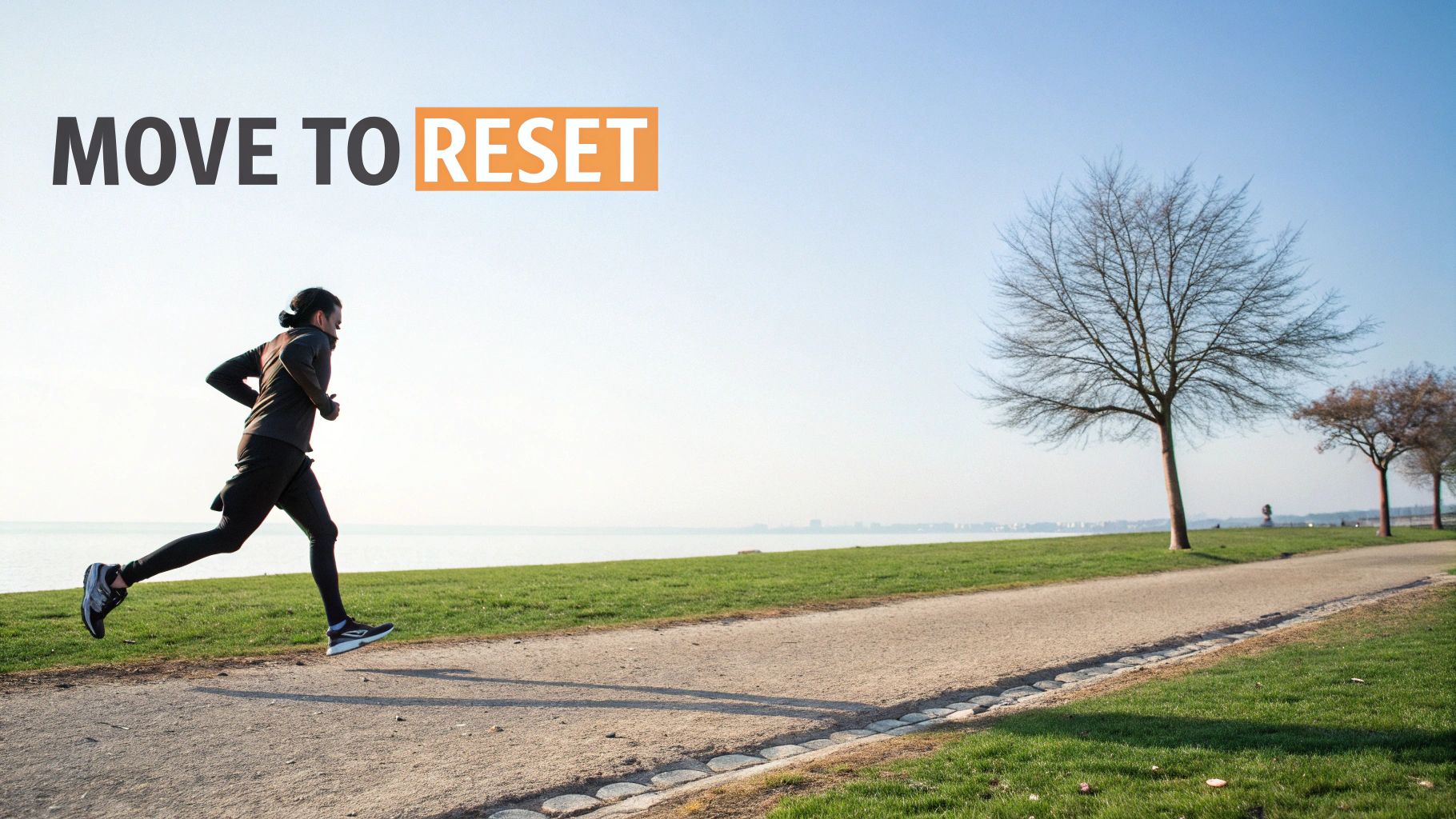
2. Physical Exercise and Movement
When your body is buzzing with stress hormones like cortisol and adrenaline, physical exercise provides a powerful, constructive outlet. It is one of the most effective coping strategies for stress, helping your body process these chemicals and release endorphins, which are natural mood elevators. This isn’t about pushing yourself to the limit; it’s about giving your body a way to release stored tension. This process delivers both immediate relief and long-term resilience, improving sleep, boosting self-confidence, and fortifying your overall mental health.
How to Practice
Integrating movement into your life doesn’t require an expensive gym membership or an intense regimen. The key is finding an activity you genuinely enjoy, making it feel less like a chore and more like a form of self-care.
- Start small: Aim for just 30 minutes of moderate activity, like a brisk walk, 3-5 times a week. Consistency is more important than intensity.
- Find your joy: Choose something that feels good for your body. This could be dancing in your living room, cycling through a park, joining a yoga class, or swimming.
- Schedule it: Block out time for movement in your calendar just as you would for any other important appointment. Treating it with importance helps you follow through.
- Embrace active commuting: When possible, walking or cycling for part of your commute is a simple way to build exercise into your daily routine.
This approach transforms physical activity from a source of pressure into a reliable ally, helping you channel stressful energy into strength and well-being.
3. Deep Breathing Techniques
When stress triggers the body’s fight-or-flight response, your breathing often becomes shallow and rapid, signaling danger to your nervous system. Deep breathing techniques are fundamental coping strategies for stress that directly counteract this process. By consciously slowing and deepening your breath, you activate the vagus nerve and engage the parasympathetic nervous system—your body’s natural relaxation response. This powerful, yet simple, intervention can lower your heart rate, reduce blood pressure, and create a sense of calm in just a few moments.
How to Practice
One of the most effective methods is Dr. Andrew Weil’s 4-7-8 Breathing Technique. This “natural tranquilizer for the nervous system” is simple to learn and can be done anywhere.
- Prepare: Sit or lie in a comfortable position. Place the tip of your tongue against the ridge of tissue just behind your upper front teeth and keep it there throughout the exercise.
- Exhale: Exhale completely through your mouth, making a gentle whoosh sound.
- Inhale for 4: Close your mouth and inhale quietly through your nose to a mental count of four.
- Hold for 7: Hold your breath for a count of seven.
- Exhale for 8: Exhale completely through your mouth, making a whoosh sound, for a count of eight.
This completes one breath cycle. Repeat the cycle three more times for a total of four breaths. This exercise gently interrupts the stress cycle, helping you regain a sense of control when you feel anxious or overwhelmed.
4. Journaling and Expressive Writing
When your mind is cluttered with anxious thoughts and overwhelming emotions, journaling and expressive writing can be powerful coping strategies for stress that help create order from the chaos. This practice involves writing down your thoughts and feelings without judgment, which helps externalize your internal struggles so you can see them with greater clarity. Research shows that even 15-20 minutes of expressive writing can significantly reduce stress and improve well-being by allowing you to process and organize difficult events in a safe space.

How to Practice
A simple way to start is through Structured Free Writing. This technique encourages you to write continuously for a set amount of time, giving your thoughts a safe place to land.
- Set a timer: Begin with just 15-20 minutes. Find a quiet space where you won’t be interrupted.
- Use a prompt: If you’re unsure where to start, use a gentle prompt like, “What is weighing on my mind today?” or “Today, I feel…”
- Write without filter: Don’t worry about grammar, spelling, or how it sounds. The goal is to let your thoughts flow freely onto the page without censoring yourself. This is for your eyes only.
- Focus on gratitude: To balance the processing of difficult emotions, try dedicating a few lines to things you are thankful for, no matter how small.
- Reflect later: Avoid the urge to re-read your entry immediately. Give yourself some space from the emotions, and come back to it later if you wish to find patterns or insights.
This practice helps untangle complex feelings and reduces their emotional charge, making them feel more manageable. It validates your experience and reminds you that your feelings are legitimate.
5. Progressive Muscle Relaxation (PMR)
Stress doesn’t just live in our minds; it takes up residence in our bodies, causing tight shoulders, clenched jaws, and persistent aches. Progressive Muscle Relaxation (PMR) is a powerful coping strategy for stress that directly addresses this physical tension. Developed by Dr. Edmund Jacobson, this technique involves systematically tensing specific muscle groups and then releasing them, teaching you to recognize the difference between tension and relaxation. This process not only eases muscle strain but also helps lower stress hormones and fosters a profound state of calm.
How to Practice
This simple yet effective exercise can be done anywhere you can sit or lie down comfortably. Follow these steps, moving sequentially through the body:
- Tense for 5, Release for 10: Start with your feet. Gently curl your toes and tense the muscles in your feet for about five seconds. Then, release the tension completely and notice the feeling of relaxation for about ten seconds.
- Work Your Way Up: Systematically move up your body, tensing and releasing each major muscle group: calves, thighs, glutes, abdomen, back, hands, arms, shoulders, and finally, your face.
- Breathe and Notice: Combine the practice with slow, deep breathing. As you release each muscle group, exhale deeply and focus on the sensation of warmth and heaviness that signals relaxation.
- Use a Guide: When you’re starting, guided audio recordings can be incredibly helpful to keep you focused and on track.
Practicing PMR consistently helps you become more attuned to your body’s signals, allowing you to release tension before it builds into overwhelming physical stress.
6. Challenge Your Thoughts with Gentle Curiosity
Stress often feels amplified by our own thoughts, which can get stuck in negative loops of worry or self-criticism. We often talk to ourselves in ways we would never speak to a friend. Gently questioning these thoughts is a powerful coping strategy for stress. This approach, rooted in Cognitive Behavioral Therapy (CBT), helps you identify, question, and reframe the unhelpful thought patterns that fuel your stress. By understanding how your thoughts influence your feelings, you can learn to intercept an anxious spiral before it takes over, fostering a more balanced and compassionate perspective.
How to Practice
A core exercise is Cognitive Restructuring, which helps you gently challenge and change stressful thoughts. When you notice a distressing thought, you can take a moment to explore it with curiosity:
- Identify the Thought: Write down the exact negative thought that is causing you stress. For example, “I am going to fail this presentation and everyone will think I’m incompetent.”
- Gently Question It: Ask yourself with kindness, “Is this thought 100% true? Is there another way to look at this?” You might remember past successes or positive feedback.
- Consider Alternatives: Brainstorm other, more balanced possibilities. Perhaps, “I am nervous about the presentation, but I am prepared. Even if it’s not perfect, that doesn’t define my competence.”
- Reframe with Compassion: Create a new, more realistic and kind thought. For example, “I will do my best on this presentation. It’s an opportunity to learn, and my value isn’t based on one single performance.”
This structured process interrupts automatic negative thinking and empowers you to consciously choose a more helpful mindset, reducing the emotional impact of stressful situations.
7. Lean on Social Support and Connection
Human beings are wired for connection. When stress makes you want to retreat and isolate yourself, reaching out is one of the most powerful and protective coping strategies for stress. This isn’t a sign of weakness; it’s a sign of strength. Nurturing your relationships provides emotional support, practical help, and a vital sense of belonging. Sharing your experience with a trusted friend or family member can validate your feelings and remind you that you are not alone. This connection buffers the physiological effects of stress and fosters deep resilience.
How to Practice
Intentionally nurturing your social bonds can make a significant difference, even in small ways. The “One Reach-Out a Day” practice can help make this feel more manageable:
- Day 1: Text a friend just to say you are thinking of them.
- Day 2: Call a family member for a brief chat during your commute or on a walk.
- Day 3: Engage in a shared interest, like a book club, sports team, or community garden.
- Day 4: Schedule a coffee or a walk with someone you enjoy spending time with.
- Day 5: Practice active listening by asking a colleague how they are doing and genuinely hearing their response without judgment.
Sometimes, especially after trauma, we might find ourselves trying to please others to keep the peace. This is known as a “fawn response”—a coping mechanism developed to stay safe. Recognizing this can be the first step toward building connections that feel truly authentic and supportive, where you can be yourself without fear.
8. Time Management and Prioritization
When your to-do list feels endless and deadlines loom, the sense of being overwhelmed is a significant source of stress. Strategic time management is one of the most effective coping strategies for stress because it restores a sense of control. By organizing your tasks, you can reduce overwhelm, clarify what truly matters, and create realistic expectations for yourself. This isn’t about doing more; it’s about doing what’s important with greater ease, moving from a state of chaotic reaction to one of intentional action.
How to Practice
A powerful yet simple method is to use the Eisenhower Matrix to categorize your daily tasks. This framework helps you decide what to focus on by dividing tasks into four quadrants:
- Urgent and Important: Do these tasks immediately. (e.g., a looming project deadline, a client crisis)
- Important, but Not Urgent: Schedule time to do these tasks. This is where you should spend most of your time for long-term well-being. (e.g., planning, exercise, personal growth)
- Urgent, but Not Important: Delegate these tasks if possible, or see if they can wait. (e.g., some emails, interruptions from others)
- Neither Urgent Nor Important: Let these go. (e.g., mindless scrolling, time-wasting activities)
By consciously sorting your responsibilities this way, you ensure your energy is directed toward what truly matters, preventing burnout and creating precious space for rest. For more ideas on managing daily pressures, explore these simple strategies to tackle everyday stress.
9. Relaxation and Creative Activities
Engaging in hobbies and creative pursuits that bring you joy is one of the most restorative coping strategies for stress. Activities like painting, gardening, playing an instrument, or knitting activate different parts of your brain, providing a healthy escape from daily pressures. These pursuits can induce a “flow state,” where you become so fully immersed in an activity that you lose track of time and your worries fade into the background. This state is incredibly effective for reducing stress hormones and promoting a sense of accomplishment and calm.
How to Practice
Finding a creative outlet that feels like play, not work, is the key to unlocking its stress-reducing benefits. Rather than adding another item to your to-do list, think of this as scheduling time for mental restoration.
- Schedule your creative time: Block it out in your calendar like any other important appointment. Protecting this time gives you permission to recharge.
- Choose genuine joy: Don’t pick up a hobby because it’s popular; choose something that genuinely interests you. The goal is enjoyment, not performance.
- Embrace imperfection: Give yourself permission to be a beginner. The value is in the process of creating, not in producing a perfect final product.
- Find your community: Joining a class or workshop can provide connection and reduce feelings of isolation. Sharing your interests can amplify the positive effects. For more on this, you can learn about the healing power of gardening on gentlepathways.ca.
- Experiment freely: If one activity doesn’t resonate, try another. The journey of discovering what brings you joy is part of the healing process itself.
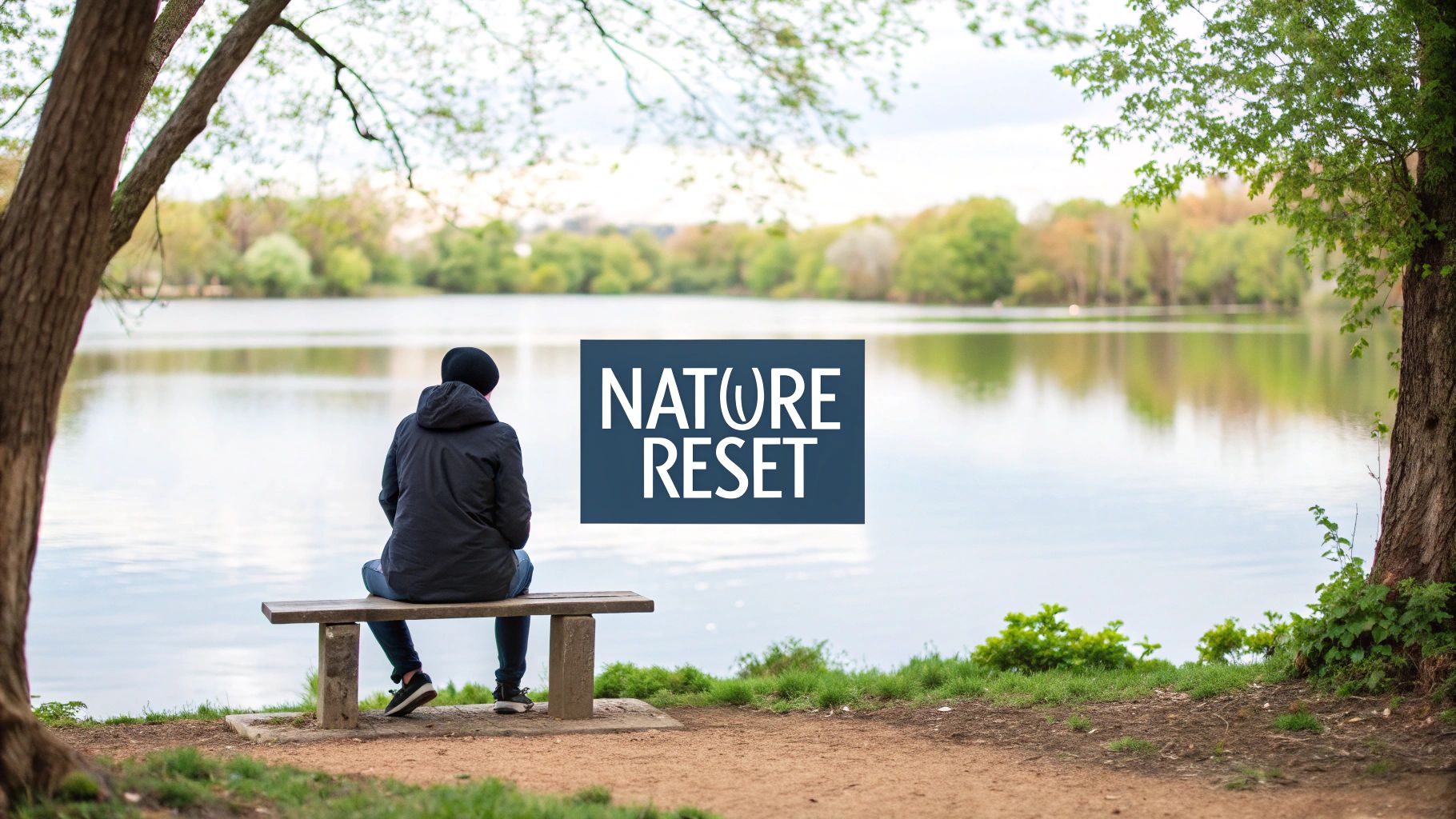
10. Nature Exposure and Outdoor Time
When modern life feels overwhelming, one of the most effective coping strategies for stress involves stepping away from screens and reconnecting with the natural world. Spending time in nature lowers the stress hormone cortisol, reduces blood pressure, and calms a busy mind. This restorative practice works by engaging your senses in a gentle, non-demanding way, allowing your mental energy to recharge and offering a powerful antidote to urban noise and digital fatigue.
How to Practice
A simple yet profound way to connect with nature is by practicing Shinrin-yoku, or “forest bathing.” Unlike a strenuous hike, the goal is simply to be present and absorb the environment. To get started, find a green space and:
- Find a comfortable spot: Sit or stand quietly for a few minutes and notice your breath.
- Wander without a destination: Walk slowly and allow your body to guide you. There is no goal or finish line.
- Engage all your senses: Notice the different shades of green, feel the texture of bark, listen to the birdsong, and inhale the earthy scent of the soil.
- Stay for at least 15-20 minutes: Allow yourself enough time to disengage from your worries and fully immerse in the experience.
This mindful practice interrupts the stress cycle by grounding you in the peace of the natural world. Learn more about the healing power of nature on gentlepathways.ca.
10 Stress-Coping Strategies Comparison
| Practice | Implementation complexity | Resource requirements | Expected outcomes | Ideal use cases | Key advantages |
|---|---|---|---|---|---|
| Mindfulness and Meditation | Low–moderate — requires consistent practice | Minimal — quiet space, optional apps or teacher | Reduced stress/cortisol, better emotional regulation over time | Daily stress management, workplace breaks, resilience building | Scientifically validated, accessible, no pharmacological side effects |
| Physical Exercise and Movement | Moderate — requires planning and motivation | Low–high — space, footwear, gym or equipment optional | Immediate mood boost, improved sleep, long-term anxiety reduction | Acute stress relief, improving sleep, overall mental/physical health | Neurochemical benefits, wide health gains, flexible formats |
| Deep Breathing Techniques | Low — easy to learn and apply | Minimal — no equipment, can be done discreetly | Rapid calming, lower heart rate/BP, short-term cortisol reduction | Panic/anxiety episodes, quick in‑moment relief, pre-performance | Fast-acting, portable, evidence-backed |
| Journaling and Expressive Writing | Low — simple but needs consistency | Minimal — notebook or digital app, private time | Clarified thoughts, emotional release, reduced anxiety over time | Processing emotions, tracking triggers, therapeutic adjunct | Inexpensive, promotes insight, creates personal record |
| Progressive Muscle Relaxation (PMR) | Moderate — guided sequence, practice required | Minimal — quiet space, optional audio guidance | Reduced muscle tension, improved sleep, deep relaxation | Chronic tension, insomnia, pre-sleep routine | Targets somatic symptoms, effective for physical tension |
| Cognitive Behavioral Techniques (CBT) | Moderate–high — skill development, practice | Time, possibly therapist, workbooks or digital programs | Long-term coping skills, reduced anxiety/depression, cognitive change | Clinical anxiety/depression, persistent negative thinking, long-term change | Strong evidence base, addresses root causes, transferable skills |
| Social Support and Connection | Low–moderate — requires interpersonal effort | Time and access to social networks or groups | Reduced isolation, emotional buffering, practical support | Ongoing stress, recovery, caregiving, loneliness | Powerful protective factor, provides validation and resources |
| Time Management and Prioritization | Moderate — planning and habit change | Tools/apps or planners, initial time investment | Reduced overwhelm, increased productivity, better balance | Overload situations, deadline-driven work, burnout prevention | Structural reduction of stress, improves efficiency and control |
| Relaxation and Creative Activities | Low–moderate — depends on activity complexity | Varies — materials, space, or classes may be needed | Flow state, mood improvement, stress reduction | Leisure recovery, creative expression, building self-esteem | Enjoyable, fosters presence, boosts confidence |
| Nature Exposure and Outdoor Time | Low — access-dependent simplicity | Time and access to green/blue spaces; minimal gear | Rapid cortisol reduction, improved mood, cognitive restoration | Short restorative breaks, creativity boosts, routine stress relief | Fast physiological benefits, low cost, broadly accessible |
Your Path Forward: Taking the Next Gentle Step
We’ve journeyed through a wide landscape of powerful and practical coping strategies for stress, from the quiet stillness of mindfulness to the grounding rhythm of a walk in nature. You’ve explored how movement can dissipate tension, how writing can untangle complex emotions, and how your own breath can anchor you in the present moment. Each strategy, whether it’s connecting with a loved one or reorganizing your day, offers a unique pathway back to yourself.
The most important takeaway is this: you do not need to master all of these at once. The goal isn’t to build an overwhelming new to-do list. Instead, the invitation is to find just one or two techniques that feel gentle and achievable for you right now. Perhaps the idea of progressive muscle relaxation feels comforting today, or maybe setting aside five minutes for journaling seems like a kind place to start. The power lies not in perfection, but in the compassionate act of trying.
Embracing Your Unique Journey
Remember, managing stress is a deeply personal practice, not a performance. What works brilliantly one day might not feel right the next, and that is perfectly okay. Your needs will shift. The true skill you are building is self-awareness: the ability to pause, check in with yourself, and ask with kindness, “What do I need in this moment?”
This collection of tools is your personal resource kit.
- When feeling overwhelmed, you might reach for a deep breathing exercise or a time management technique.
- For lingering physical tension, progressive muscle relaxation or gentle exercise could be your go-to.
- For emotional turmoil, journaling or a heartfelt conversation with a friend might provide the most relief.
By experimenting with these coping strategies for stress, you are actively telling yourself that your well-being matters. You are honoring your own capacity for resilience. Every small, intentional action can create profound shifts in how you feel. This journey is about reclaiming your sense of agency and remembering that you hold the power to navigate life’s challenges with grace and self-compassion.
If you feel you need more personalized support, please know that you don’t have to do this alone. The compassionate, trauma-informed therapy at Gentle Pathways is here to guide you. We specialize in helping individuals, families, and first responders develop effective coping strategies for stress in a safe and supportive environment. Reach out to Gentle Pathways to learn more or to book a consultation.